
Driverless cars – it can be a divisive topic. Some people love them. Some people hate them. The lovers and the haters are like oil and water in my experience. They just don’t come together well – they don’t like mixing. Yet oil and water can be helped to mix by adding an emulsifier. Hence I propose we need an event called ‘The Driverless Cars Emulsion’.
In this article I want to set out why the event is needed and some ground rules that I think would have to be applied.
First of all, I know there are all sorts of qualifications and nuances when getting into this topic. For instance, I’m suggesting driverless cars (DCs) rather than autonomous vehicles because I think this is where most contention lies. My hope with this article is to transcend these to focus upon my principal concern which is the need for different constituencies of commentators to come together in the interest of the common good.
Constituencies
Which constituencies are out there? Oversimplifying reality, I’d suggest there are (amongst others):
DC-evangelists – those who are persuaded that DCs will be a (great) benefit to (parts of) society and want to play a part in making them happen;
DC-opponents – those who are appalled by the prospect of DCs and either doubt they will ever happen or anticipate (great) disbenefit to (parts of) society;
DC-pragmatists – those who devote their expertise to the R&D drive to make DCs happen because the work’s interesting and it ‘pays the bills’; and
DC-agnostics – those who are ambivalent about the virtues of a possible DCs future.
Please have a think about which constituency you best align with – or suggest other constituencies.
Why come together?
Here’s the problem as I see it. It seems with little prior soul-searching or at least consultation and debate, it was ‘decided’ that DCs are the future and that they should be brought into existence because they will deliver benefits. As a result, we have government- and industry- backed armies of experts working to deliver this. Its being called innovation.
Its created an ‘in group’ and an ‘out group’. Those in the in group (led by the evangelists) largely talk and collaborate amongst themselves. Those in the out group (led by the opponents) largely talk and collaborate amongst themselves. Conferences and Twitter feeds for individuals in the groups create the illusion of their group being the epicentre of what matters. The other group is inferior and doesn’t get it.
But an understanding of innovation – and even moreso responsible innovation – points to the shortcomings of the situation above:
(1) There is a distinction between innovation and invention. The latter might be the technological creation of a DC that can avoid crashing or hitting people and objects. The former is the adoption of the invention into society. Invention doesn’t guarantee innovation.
(2) Innovation (thanks Chris Parker) involves being able to understand and address the problem, the solution and its implementation. The prospect of failure increases if attention skirts over the problem and is devoted too quickly to the solution. The evangelists may be guilty of this. They saw ‘road traffic accidents, people unable to drive and wasted time sat driving cars’ and bought it as the problem DCs were going to solve without question. It was bought without really seeking to understand the problem that needed solving or indeed the unanticipated problems that might arise with the solution on the table.
(3) Innovation really flourishes when the arts and sciences come together. Or in other words, innovation is a socio-technical phenomenon requiring an understanding of the social and the technical systems and how they interact. DCs are a complex phenomenon and to truly weight up whether and how they can be created and diffused into society calls for multiple perspectives and inter-disciplinary approaches being brought to bear. If the in group ignores the out group it is missing some key ingredients. If the out group ignores the in group it denies development of DCs the benefit of its wisdom and might even be deemed complicit if a DCs future does arrive and is more dystopian than utopian.
This is why I believe we need the Driverless Cars Emulsion event. If we are going to have DCs, let’s properly understand why we should have them (to save lives?, to improve people’s lives? to save the car industry?, to save the economy? to…) and reach a determination on whether and why DCs might be the right solution for the problem at hand. If the different constituencies come together, their combined expertise and understanding holds the prospect of a much stronger foundation upon which to proceed onwards with how to develop and implement DCs.
What ground rules?
For the Driverless Cars Emulsion event to be successful it would need some ground rules – the emulsifier to bring the oil and water together.
1. It needs oil and water – the event would need people from across the different constituencies to be present. If it only has oil or water, it won’t be an emulsion.
2. Its not about winning or losing – if (some of) the people attending have arrived with the objective to see their view prevail above others then the emulsion won’t form – each view will be resistant to others with no coming together.
3. Its about being self-aware – we are all affected by unconscious biases and these need to be confronted to help the mixing process. Cognitive dissonance concerns being more likely to believe things that are easier to understand. Confirmation bias concerns only looking for information that confirms one’s existing position. Blindspot bias concerns my thinking that I am less susceptible than everyone else to such biases.
4. The aim should be the whole being greater than the sum of its parts – the event’s proceedings should be shaped by a common goal of collectively learning more by coming together than would be the case if constituencies had talked amongst themselves at their ‘own’ events.
5. Emulsifier is needed throughout – oil and water don’t mix by themselves and the planning, organisation, facilitation and report on the event would need continued attention to be paid to avoiding the risk of constituencies separating back out.
6. There must be a level playing field (apologies for mixing metaphors at the last!) – Perceptions are important and the parties responsible for making the event happen would need to be able to demonstrate impartiality to the different constituencies. Those participating in the event need to know that it has been designed in a ‘fair’ way so that they have the confidence to devoting their energies and expertise to the common goal.
I first suggested this event idea on Twitter and was surprised by the level of interest it generated. This is what has prompted this article. There seems to be a strong appetite for such an event – building upon others’ ideas and previous events. I hope the thinking in the article can help act as a catalyst for the Driverless Cars Emulsion event actually happening. If you like the sound of it please spread the word and share your views.
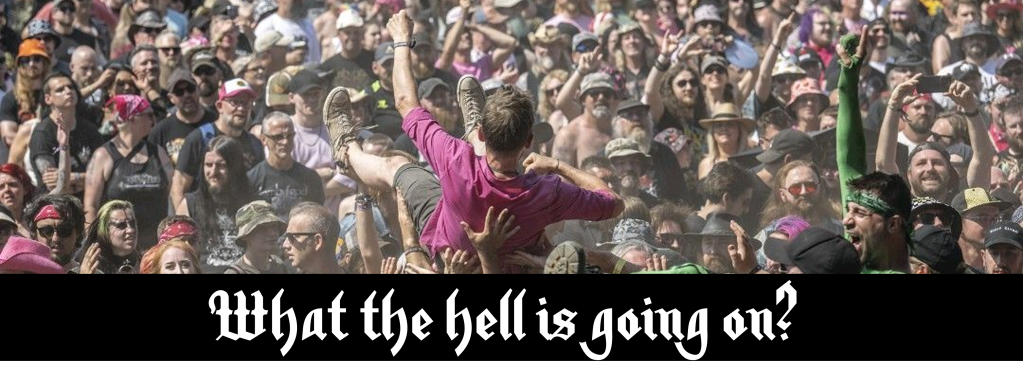
 What the hell is going on?
Leave a comment